

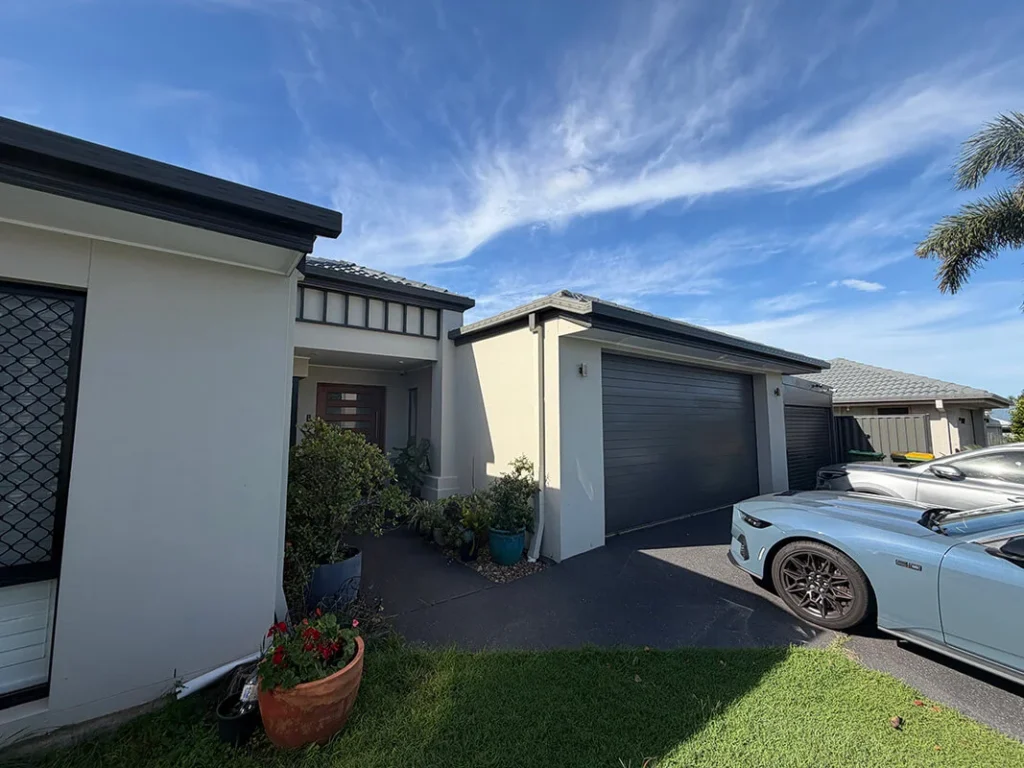
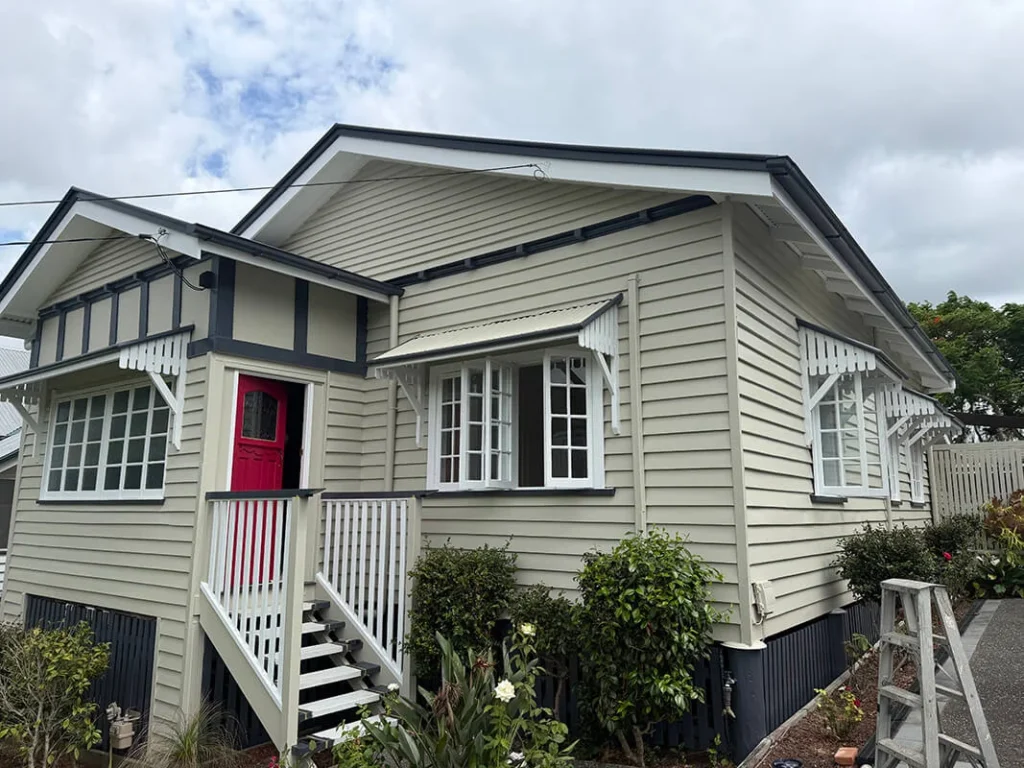
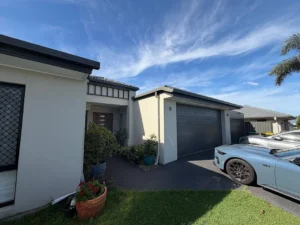
 Exterior house painting. How long will this take? It all depends on the property that we’re painting. If we were to paint a standard low-set modern home that has colour bond gutters and fascias, an eave that needs painting and render walls, we would generally get through these low-set modern homes within two weeks maximum.
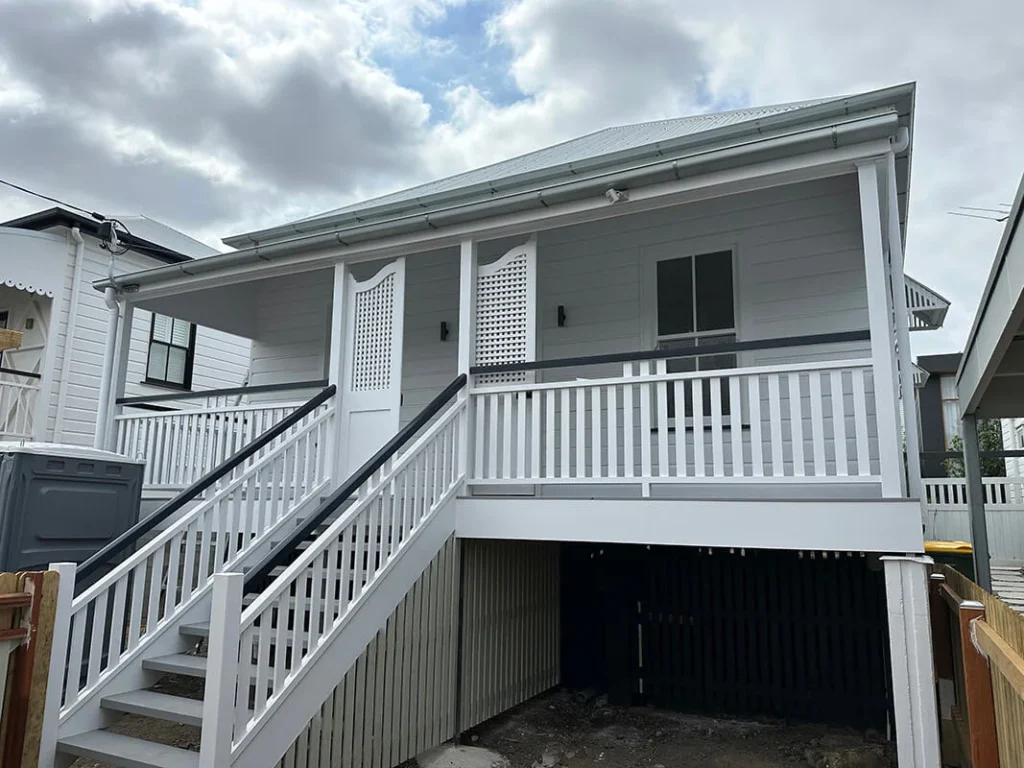
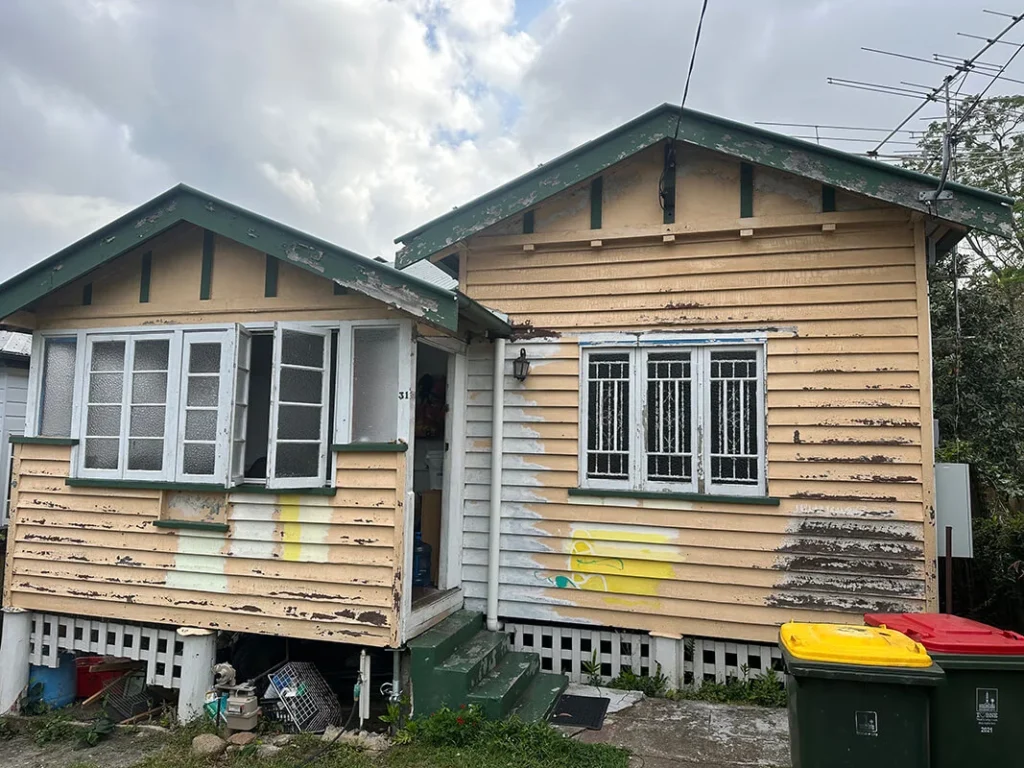
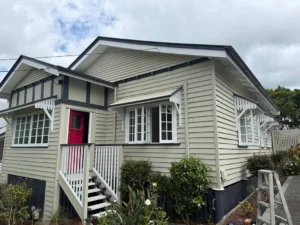
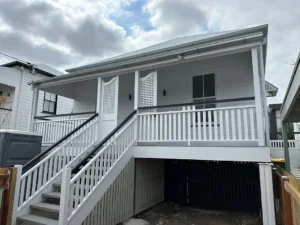 It is quite a simple process with very little preparation work needing to be done, and being a low-set we don’t have the concern of having to set scaffolding up either. In comparison, if we were to paint an older Queenslander style home which is all timber, we’ve got the old gutters and fascias, timber eaves, timber walls, timber windows, a lot of the glass on these properties needs to be re-glazed with putty. And we also find in terms of the preparation, the old timber walls are generally flaking, the paint is coming off, which then means that we have to use a paint stripper to remove the paint.
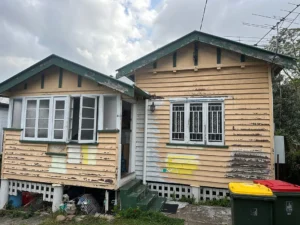 And also too, we need to be checking to make sure if there’s any lead-based paint in the old coatings, as this means that we have to follow a different direction in terms of doing the paint removal, which generally consists of using an environmentally friendly paint stripper to remove the old flaky paint. So as a result, this does slow the whole process down, and as a general rule, we’d be looking at about three to four weeks, generally closer to the four-week mark, to paint a standard Queenslander style home. The other area that will slow us down too is access.
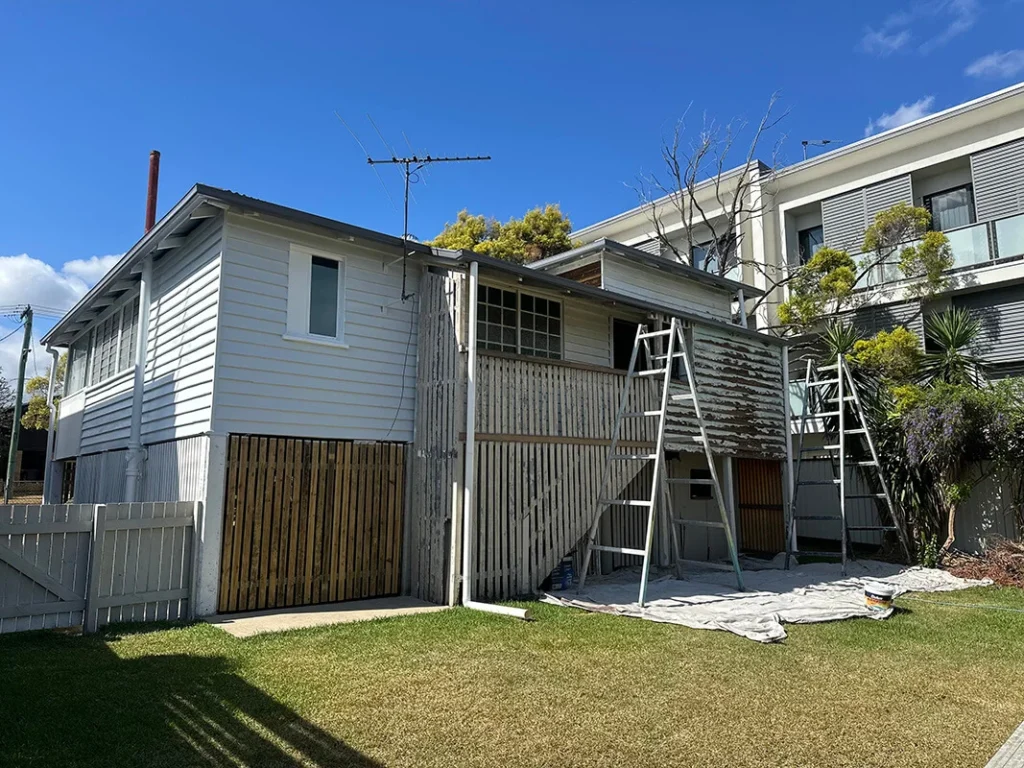
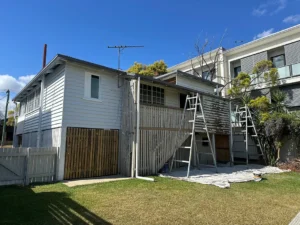
The older Queenslander homes are generally high-set, which then means that we have to bring in scaffolding to set up to access all the high points of the property, including gutters and fascias and gable ends, and also getting to the heights of the higher walls. We generally find too, the older Queenslander homes require more paint. So after the preparation, what we’re generally left with is an unpainted timber surface.
 This needs to be primed up with an oil-based primer, and then we go through and use a filler to fill up any imperfections in the timber to try and get them a bit smoother, if possible, and then from there we have to prime that filler again, and then it gets two top coats over the top of all of that. So by the end of it, we can generally be looking at about a four-coat system with a lot of the older Queenslanders, whereas the newer modern homes, generally two coats of paint over the whole surface is generally sound enough.
 Exterior house painting. How long will this take? It all depends on the property that we’re painting. If we were to paint a standard low-set modern home that has colour bond gutters and fascias, an eave that needs painting and render walls, we would generally get through these low-set modern homes within two weeks maximum.
Exterior house painting. How long will this take? It all depends on the property that we’re painting. If we were to paint a standard low-set modern home that has colour bond gutters and fascias, an eave that needs painting and render walls, we would generally get through these low-set modern homes within two weeks maximum.
It is quite a simple process with very little preparation work needing to be done, and being a low-set we don’t have the concern of having to set scaffolding up either. In comparison, if we were to paint an older Queenslander style home which is all timber, we’ve got the old gutters and fascias, timber eaves, timber walls, timber windows, a lot of the glass on these properties needs to be re-glazed with putty. And we also find in terms of the preparation, the old timber walls are generally flaking, the paint is coming off, which then means that we have to use a paint stripper to remove the paint.
And also too, we need to be checking to make sure if there’s any lead-based paint in the old coatings, as this means that we have to follow a different direction in terms of doing the paint removal, which generally consists of using an environmentally friendly paint stripper to remove the old flaky paint. So as a result, this does slow the whole process down, and as a general rule, we’d be looking at about three to four weeks, generally closer to the four-week mark, to paint a standard Queenslander style home. The other area that will slow us down too is access.
The older Queenslander homes are generally high-set, which then means that we have to bring in scaffolding to set up to access all the high points of the property, including gutters and fascias and gable ends, and also getting to the heights of the higher walls. We generally find too, the older Queenslander homes require more paint. So after the preparation, what we’re generally left with is an unpainted timber surface.
This needs to be primed up with an oil-based primer, and then we go through and use a filler to fill up any imperfections in the timber to try and get them a bit smoother, if possible, and then from there we have to prime that filler again, and then it gets two top coats over the top of all of that. So by the end of it, we can generally be looking at about a four-coat system with a lot of the older Queenslanders, whereas the newer modern homes, generally two coats of paint over the whole surface is generally sound enough.